
7 Types of Medical Filters Every Healthcare Facility Needs
Air quality in a hospital isn’t a comfort issue. It’s a patient safety issue.
A single contaminated air supply in an operating room can cause post-surgical infections. A failed medical filter in a pharmaceutical clean room can compromise an entire batch of medication. A poorly filtered HVAC system in a hospital ward exposes immunocompromised patients to airborne pathogens they can’t fight.
We manufacture medical filters for healthcare facilities across industries — hospitals, labs, pharma plants, dental clinics, and clean rooms. This guide covers the 7 types your facility needs, what each one does, and how to choose correctly.
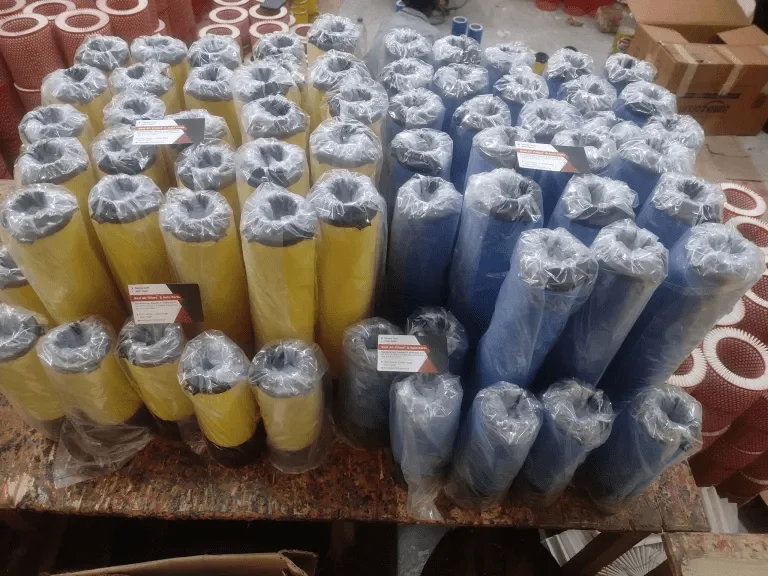
Why medical filtration is different from standard commercial filtration
Standard commercial air filters handle dust, pollen, and general particulate. That’s enough for an office building.
Healthcare environments carry a different risk profile. Airborne bacteria, fungal spores, virus-carrying particles, volatile organic compounds (VOCs), and surgical smoke are all present — and all dangerous to patients with compromised immune systems.
The CDC guidelines on environmental infection control state that air filtration is one of the primary controls for preventing airborne transmission of infectious agents in healthcare settings.
Medical filters must meet stricter standards, maintain performance under continuous operation, and be replaced on a documented schedule. Unlike standard filters, medical filters are tested, certified, and documented — cutting corners here has direct clinical consequences.
Type 1: HEPA filters
HEPA (High-Efficiency Particulate Air) filters capture 99.97% of particles at 0.3 microns or larger. That includes dust, pollen, mold spores, most bacteria, and particulate that carries viruses.
They’re the standard requirement for the highest-risk areas in any healthcare facility.
Where they’re used:
- Operating rooms
- Intensive care units (ICUs)
- Isolation rooms for infectious patients
- Bone marrow and organ transplant wards
- Pharmaceutical manufacturing clean rooms
MERV equivalent: MERV 17–20
Replacement frequency: Every 12 months under normal operating conditions, more frequently in high-use environments. Always follow your facility’s infection control protocol.
The WHO’s natural ventilation guidelines for infection control identify HEPA filtration as a critical supplementary measure in settings where airborne infection risk is high.
View our HEPA filter range at fiilters.com
Type 2: ULPA filters
ULPA (Ultra-Low Particulate Air) filters go beyond HEPA. They capture 99.999% of particles at 0.12 microns — smaller than most HEPA filters handle.
These are required in environments where even trace contamination is unacceptable.
Where they’re used:
- Pharmaceutical grade A and B clean rooms
- Semiconductor manufacturing (shared with medical device production)
- Radioactive particulate containment
- Advanced research laboratories
Key difference from HEPA: ULPA filters have higher airflow resistance (pressure drop), so your HVAC system must be specified to handle them. Using a ULPA filter in a system designed for HEPA can reduce airflow and create dead zones.
If your facility operates under ISO 14644 clean room standards, your filter specification should match your clean room classification — ISO Class 4 or 5 environments typically require ULPA.
Request ULPA filter specifications
Type 3: Surgical smoke filters
Surgical smoke is generated during electrosurgery, laser surgery, and ultrasonic procedures. It contains:
- Benzene
- Formaldehyde
- Carbon monoxide
- Viable cellular material (including blood-borne pathogens in some cases)
- Ultrafine particles at 0.1 microns or smaller
Standard HEPA filters don’t fully capture ultrafine particles at this size range. Surgical smoke evacuation systems use combination filters — a pre-filter for larger particles, a HEPA layer, and an activated carbon layer for chemical vapors.
Where they’re used:
- Operating theaters
- Procedure rooms using electrosurgical units
- Laser treatment rooms
The National Institute for Occupational Safety and Health (NIOSH) recommends local exhaust ventilation with appropriate filtration as the primary control for surgical smoke exposure.
See our surgical smoke filtration options
Type 4: Activated carbon filters
Activated carbon filters don’t capture particles. They absorb gases and chemical vapors through adsorption — the gas molecules bind to the carbon surface.
In healthcare, this matters for:
- Anesthetic gases (isoflurane, sevoflurane) that escape during procedures
- Formaldehyde from pathology labs and mortuaries
- Ethylene oxide residues from sterilization areas
- VOCs from cleaning agents and disinfectants
- Odor control in patient areas and waste handling zones
Where they’re used:
- Anesthesia recovery rooms
- Pathology and histology labs
- Sterilization departments
- Waste management areas
- Dialysis units
Activated carbon filters are almost always used in combination with a particulate filter — carbon handles the gases, HEPA or MERV-rated filters handle the particles.
Replacement indicator: Carbon filters saturate over time. Once saturated, they stop absorbing and can release previously captured gases. Replace on schedule, not just when odor returns.
View combination filter options
Type 5: MERV 13–16 filters for general hospital HVAC
Not every area in a hospital needs HEPA. Patient corridors, waiting rooms, administrative areas, and general wards use high-efficiency MERV filters in the MERV 13–16 range.
What MERV 13–16 captures:
- Fine dust and particulate
- Bacteria (most species)
- Smoke particles
- Sneeze and cough aerosol droplets
- Particles down to 0.3–1.0 microns
ASHRAE Standard 170 (Ventilation of Health Care Facilities) specifies minimum filter requirements by room type. General patient rooms require MERV 14 as a minimum. ASHRAE 170-2021 is the current version and the standard most accreditation bodies reference.
| Hospital Area | Minimum MERV Rating |
|---|---|
| General patient rooms | MERV 14 |
| Emergency departments | MERV 14 |
| Corridors and waiting areas | MERV 13 |
| Operating rooms | HEPA (MERV 17+) |
| Isolation rooms | HEPA (MERV 17+) |
| ICU | MERV 14–16 minimum |
Get MERV 13–16 filters for hospital HVAC
Type 6: Bag filters (pre-filters for HEPA systems)
HEPA filters are expensive and have a specific pressure drop profile. Running them without pre-filtration causes 2 problems: the HEPA loads up with coarse dust faster, and replacement costs rise significantly.
Bag filters (MERV 11–13) sit upstream of HEPA units and capture the larger particles before they reach the HEPA layer. This extends HEPA filter life by 3–4x in most healthcare HVAC configurations.
Where they’re used:
- Any system with a downstream HEPA filter
- Large hospital HVAC air handling units
- Pharmaceutical manufacturing HVAC
Key spec to check: The bag filter’s MERV rating and frame dimensions must match your air handling unit’s housing. A mismatched frame creates bypass — unfiltered air travels around the filter instead of through it.
We manufacture bag filters in standard and custom dimensions. Request sizing at fiilters.com.
Type 7: Antimicrobial filters
Antimicrobial filters have a biocide treatment applied to the filter media. The treatment inhibits bacterial and mold growth on the filter surface itself — which matters because a loaded filter can become a microbial growth site if moisture is present.
These are used as an added protection layer, not as a replacement for HEPA or high-MERV filtration.
Where they’re used:
- Dental clinics (high aerosol generation from drilling)
- GP and outpatient clinics
- Aged care facilities
- Any facility in high-humidity environments where mold growth on filter media is a documented risk
Certification to look for: Antimicrobial filters should carry ISO 22196 or JIS Z 2801 certification for the biocide treatment. Without third-party testing, the antimicrobial claim is unverified.
View antimicrobial filter options
How to choose the right medical filter for your facility
Step 1: Identify the room classification
ASHRAE 170 and your local health authority will define minimum filter requirements by room type. Start there before looking at any product.
Step 2: Check your HVAC system specs
Filter efficiency and airflow resistance (pressure drop, measured in Pa or inches w.g.) must match what your air handling unit can support. A filter with too high a pressure drop reduces airflow and creates under-ventilated zones.
Step 3: Calculate total cost of ownership
A HEPA filter costs more upfront than a MERV 14 panel filter. But in an operating room, the HEPA is the minimum — there’s no substitution. In general wards, choosing MERV 14 over MERV 16 may reduce cost without compromising the required standard.
Pre-filter combinations (bag filter + HEPA) reduce annual filter costs by extending HEPA life. Factor that in.
Step 4: Set a replacement schedule
Medical filters don’t announce when they fail. Set replacement schedules based on manufacturer specs and your facility’s air quality monitoring data — not just visual inspection. A visually clean filter can still be at capacity.
Step 5: Document everything
For Joint Commission accreditation, CMS certification, or any healthcare facility inspection, you’ll need records: filter specifications, installation dates, replacement dates, and compliance with ASHRAE 170. We provide product documentation with every order to support your records.
Buying direct from a manufacturer: what it means for healthcare facilities
Most healthcare procurement teams buy medical filters through distributors. That’s a workable process, but it has 3 specific disadvantages for regulated facilities:
Custom sizing: Many older hospital buildings have non-standard duct dimensions. Distributors stock standard sizes. We manufacture to your exact dimensions.
Compliance documentation: We provide MERV certification, material safety data, and filter performance test reports with every batch. This directly supports your accreditation documentation.
Bulk and emergency supply: We maintain production capacity for both scheduled bulk orders and urgent replacement needs. Distributor stock levels vary.
Contact our team for healthcare facility pricing
Frequently asked questions
What filter does an operating room need?
HEPA (MERV 17 minimum) per ASHRAE Standard 170. Most operating room specifications require 20 or more air changes per hour with 100% HEPA-filtered supply air.
How often should medical filters be replaced?
HEPA filters in operating rooms: every 12 months or when pressure drop reaches the manufacturer’s end-of-life specification, whichever comes first. Pre-filters: every 3–6 months. Activated carbon filters: every 6 months or per saturation indicators.
Do you supply filters that meet Joint Commission standards?
Yes. We provide full product documentation including MERV ratings, filter media composition, and test reports. Your infection control team can confirm compliance with your specific accreditation requirements.
Can you manufacture custom size filters for older hospital buildings?
Yes. Share your required dimensions and we’ll produce to spec. Request custom sizing here.
What’s the difference between HEPA and ULPA?
HEPA captures 99.97% of particles at 0.3 microns. ULPA captures 99.999% of particles at 0.12 microns. ULPA has higher airflow resistance and is required for ISO Class 4–5 clean rooms and specific pharmaceutical applications.
Do you provide filters for dental clinics?
Yes. Dental procedures generate significant aerosol. We recommend HEPA or MERV 16 filters for treatment rooms, combined with antimicrobial pre-filters in high-humidity configurations. See dental filtration options.
Summary
Medical filters requirements vary by room type, patient population, and regulatory standard. The 7 medical filter types covered here — HEPA, ULPA, surgical smoke, activated carbon, MERV 13–16, bag pre-filters, and antimicrobial filters — cover the full range of healthcare facility needs.
Choosing the right medical filter correctly means matching filter spec to room classification, HVAC capacity, replacement schedule, and documentation requirements.
We manufacture all 7 types, supply custom sizes, and provide the compliance documentation healthcare facilities need.
Contact Best Air Filters
- WhatsApp: 96255 55709
- Email: bafcustomercare@gmail.com
- Website: fiilters.com
- Factory: 197/3, Gali No. 3, Padam Nagar, Sarai Rohilla, Delhi, 110007, India
This content is based on our direct manufacturing experience in medical air filtration. Technical specifications reference ASHRAE Standard 170, CDC environmental infection control guidelines, and ISO 14644 clean room standards. Drafted with AI assistance and reviewed by our manufacturing team.