
High Temperature Filter Manufacturer in India | Fiilters.com
If your plant runs furnaces, kilns, paint booths, or any process above 200°C, standard air filters won’t last. They warp, degrade, and stop filtering — sometimes within hours. This is where high temperature filters come in, and choosing the right manufacturer in India matters more than most plant managers realize.
This guide covers everything you need to know: what high temperature filters are, how they work, which industries need them, what to look for when buying, and why sourcing from a reliable Indian manufacturer makes technical and financial sense.
What Are High Temperature Filters?
High temperature filters are industrial air filtration units built to operate continuously in environments where ambient temperatures exceed 200°C — and in some cases go up to 650°C or higher.
Standard filters use synthetic media like polyester or polypropylene. These materials begin to degrade above 80°C. A high temperature filter replaces that media with materials that stay stable under heat: fiberglass, ceramic fiber, stainless steel mesh, or specially treated metallic composites. The filter frame is also built differently — stainless steel or galvanized steel instead of cardboard or aluminum — so it doesn’t buckle under thermal stress.
The result is a filter that captures fine particulate matter (PM) at high temperatures without losing structural integrity or filtration efficiency.
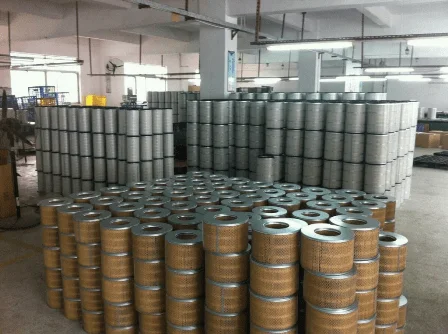
Why Industries Can't Ignore High Temperature Filtration
Particulate contamination doesn’t stop because the temperature is high. In many industrial processes, it gets worse.
Combustion produces soot and fine particles. Metal smelting generates metallic dust. Paint ovens release pigment particles and volatile compounds. Cement kilns push out fine calcium and silica dust continuously. If this particulate matter reaches downstream equipment — turbine blades, heat exchangers, precision instruments — the damage is expensive.
The real cost isn’t the filter. It’s the unplanned downtime, the early replacement of capital equipment, and in regulated industries, the environmental compliance penalties.
A properly specified high temperature filter prevents all three.
Industries That Use High Temperature Filters in India
India’s industrial base is large and growing. Several sectors depend on high temperature filtration as a standard part of their process:
Steel and metal manufacturing. Blast furnaces and electric arc furnaces run at temperatures where conventional filters fail within a shift. High temperature filters protect downstream systems and help plants meet emission norms under the Environment Protection Act.
Automotive paint shops. Paint booths and curing ovens need continuous particle-free airflow. Contaminated air causes surface defects in paint — a single batch rejection costs far more than a quality filter. Leading OEMs and tier-1 suppliers in Pune, Chennai, and Gurugram rely on filters rated for 200°C to 350°C for their paint booth recirculation systems.
Power generation. Gas turbines, diesel gensets, and thermal power equipment pull large volumes of air. Particulate ingestion wears turbine blades and reduces efficiency. High temperature intake filters extend maintenance intervals significantly.
Pharmaceutical and chemical processing. Many reaction processes and dryers operate at elevated temperatures. Filtration is needed both for product purity and worker safety.
Cement production. Rotary kilns run above 1000°C. Even the exhaust gases hitting filtration systems downstream can exceed 300°C. Ceramic fiber media is standard here.
Food processing and industrial baking. Commercial ovens and dryers need filtered airflow to maintain hygiene standards without contaminating products.
Types of High Temperature Filters
Not all high temperature filters are the same. The right type depends on your operating temperature, dust load, efficiency requirement, and whether you need a disposable or reusable unit. Here are the 4 main types used in Indian industry:
Fiberglass High Temperature Filter
Fiberglass filters are the most widely used type for temperatures between 150°C and 250°C. The media is made from borosilicate glass fibers, which don’t shrink, melt, or lose tensile strength under sustained heat in this range.
They’re available in efficiency classes from F6 to H10 (per ISO 16890), which covers most industrial HVAC, paint booth, and curing oven applications. Frame material is typically galvanized steel below 250°C or 304 stainless steel for higher-end installations.
Best for: Paint booth supply air, curing ovens, industrial dryers, automotive OEM facilities, pharmaceutical air handling.
Operating range: Up to 250°C continuous.
Maintenance: Disposable. Replace when pressure drop reaches rated final value.
Ceramic Fiber Filter
Ceramic fiber filters handle temperatures that fiberglass can’t — from 350°C up to 1000°C in high-specification formulations. The media is made from alumino-silicate ceramic fibers, which are chemically inert and dimensionally stable at extreme heat. They don’t react with acidic or alkaline gases, which makes them suitable for kiln exhaust and metal plant applications where gas chemistry is aggressive.
The frame is always 316 stainless steel. No organic sealants or adhesives are used in the construction — everything is mechanically fastened or high-temp bonded.
Best for: Cement kilns, steel plant exhaust, rotary furnaces, power plant gas cleaning, chemical incinerators.
Operating range: 350°C to 1000°C depending on fiber grade.
Maintenance: Disposable. Not cleanable — ceramic fibers fracture under mechanical stress.
Stainless Steel Mesh Filter
Stainless steel mesh filters are the only high temperature filter type designed to be cleaned and reused. The media is a woven or knitted 304 or 316 stainless steel mesh, sometimes layered in multiple grades (coarse to fine) to build up filtration efficiency.
They handle temperatures up to 600°C and are well-suited to applications with high dust loads where frequent disposable filter replacement would be expensive. Cleaning is done with compressed air (from clean side to dirty side) or low-pressure water wash.
Best for: Steel plant inlet filtration, heavy industrial furnace pre-filters, applications where replacement filter access is difficult or costly.
Operating range: Up to 600°C.
Maintenance: Cleanable and reusable. Each cleaning restores 80% to 90% of original performance. After 5 to 8 cleaning cycles, efficiency drops enough to warrant replacement.
HEPA High Temperature Filter
High temperature HEPA filters combine the efficiency of standard HEPA media (H13/H14 per EN 1822, capturing 99.95% or more of particles at 0.3 micron) with heat-resistant construction. The media is a fine-grade borosilicate glass paper, pleated and sealed into a stainless steel or anodized aluminum frame with high-temperature silicone or ceramic sealant.
These filters are used where both high temperature and very high filtration efficiency are required together — pharmaceutical hot air systems, semiconductor manufacturing, and laboratory environments with elevated process temperatures.
Best for: Pharmaceutical manufacturing (hot air sterilization tunnels), specialty chemical processing, high-precision industrial processes.
Operating range: Up to 250°C for most HEPA configurations; specialized units up to 350°C.
Maintenance: Disposable. HEPA media cannot be cleaned without losing efficiency.
Filter Classification and Efficiency Ratings
High temperature filters are rated using the same efficiency standards as standard filters — the difference is that the rating must hold at operating temperature, not just at room temperature.
The ISO 16890 standard classifies filters by their ability to capture particles in the PM1, PM2.5, and PM10 size ranges. For industrial applications, filters typically range from F6 (medium efficiency) to H10 (HEPA-grade). The right class depends on your process requirements and downstream equipment sensitivity.
For paint booths, F7 to F9 is typical. For pharmaceutical clean rooms with high-temperature air handling, H13 or H14 may be required. For intake filtration on turbines, G4 to F7 is common depending on the site’s ambient dust conditions.
When you request a filter, always specify: operating temperature, required efficiency class, airflow (m³/hr), pressure drop limit, and frame material. A manufacturer who asks you these questions before quoting is a manufacturer worth working with.
High Temperature Filter vs Standard Filter
Plant managers sometimes ask whether a standard filter will “hold up for a while” in a high-temperature application. The answer is no — and the failure is usually fast, not gradual. Here’s how the two compare across every parameter that matters:
| Feature | Standard Filter | High Temperature Filter |
|---|---|---|
| Temperature range | Up to 80°C | Up to 650°C (type-dependent) |
| Filter media | Polyester or polypropylene | Fiberglass, ceramic fiber, or SS mesh |
| Frame material | Cardboard or aluminum | Galvanized steel or stainless steel |
| Sealant/gasket | Standard adhesive or foam | High-temp silicone or ceramic bond |
| Efficiency class (ISO 16890) | G3 to H14 | G4 to H14 (holds at temperature) |
| Reusable | No | Yes (SS mesh type only) |
| Typical service life | 6 to 12 months | 3 to 18 months (application-dependent) |
| Failure mode in heat | Warps, shrinks, media separates | Stable; fails only at end-of-life pressure drop |
| Cost | Lower upfront | Higher upfront, lower total cost in hot applications |
| Certifications | EN 779 / ISO 16890 | EN 779 / ISO 16890 / EN 1822 (HEPA) |
The key difference in real operation: a standard filter in a 200°C environment will typically fail within 2 to 8 hours. The media delaminates, the frame buckles, and unfiltered air bypasses the filter entirely. A high temperature filter in the same environment runs for months.
The upfront cost difference is real — a high temperature filter costs 3x to 5x more than a comparable standard filter. In a high-temperature installation, that cost pays back in the first replacement cycle you avoid.
What to Look for in a High Temperature Filter Manufacturer in India
The Indian filtration market has grown substantially over the past decade. You’ll find manufacturers ranging from small workshops to established facilities. The difference in product quality can be significant, and the consequences of using a substandard filter in a high-temperature process are serious.
Media sourcing and quality. Ask where the filter media comes from. Reputable manufacturers import or source verified fiberglass and ceramic fiber media from known suppliers. Media that’s been downgraded or misrepresented by grade will fail to meet the efficiency rating at temperature.
Frame construction. Check what steel grade is used. 304 stainless is adequate for most applications below 500°C. 316 stainless is preferred where corrosive gases are present. Galvanized steel is acceptable below 300°C but not above.
Testing and certification. Filters should be tested per ISO 16890 or EN 779. Ask for test certificates, not just printed spec sheets. Some manufacturers can provide Eurovent-certified products, which have been independently tested for both filtration efficiency and energy performance.
Custom manufacturing capability. Standard sizes (610×610mm, 592×592mm) cover many applications. But industrial systems often need non-standard dimensions. A manufacturer who can produce custom sizes without a 12-week lead time is more useful for plant maintenance managers.
Supply consistency. A filter is a consumable. You’ll replace it every 6 months to 2 years depending on dust load. A manufacturer who can supply consistently — same media batch, same dimensions, same performance — saves your maintenance team from re-qualifying every replacement lot.
Lead time and minimum order. For Indian plants, domestic manufacturers offer a real advantage here. Lead times of 5 to 10 days are achievable from Indian manufacturers. Imported filters from Europe or Turkey take 4 to 8 weeks and are subject to customs delays and currency risk.
Common Applications at Specific Temperature Ranges
To make specification easier, here’s a practical breakdown by temperature range:
Up to 120°C: Standard synthetic media with aluminum frame. Most industrial HVAC pre-filtration falls here.
120°C to 250°C: Fiberglass media, stainless steel or galvanized steel frame. Paint booth supply air, industrial dryers, curing ovens.
250°C to 400°C: High-grade fiberglass or ceramic fiber, stainless steel frame with high-temp gasket. Turbine intake systems, large industrial furnaces, chemical reactor exhaust.
400°C to 650°C: Ceramic fiber media, 316 stainless frame, no organic sealants. Kiln exhaust, steel plant gas cleaning, power plant applications.
Above 650°C: Specialized applications. Filters typically combined with other gas treatment systems. Consult a filtration engineer for these requirements.
Maintenance and Replacement Guidelines
High temperature filters don’t need more maintenance than standard filters — they need the right maintenance.
Inspection interval: Check pressure drop across the filter every month. A rising pressure drop means the filter is loading with dust. Most filters have a rated final pressure drop; replace before you hit it, not after.
Replacement frequency: In light-dust environments (paint booth supply air), fiberglass filters last 12 to 18 months. In heavy-dust applications (cement, steel), replacement every 3 to 6 months is common. Track your pressure drop readings to build a site-specific replacement schedule.
Stainless steel mesh filters: These can be cleaned with compressed air (blow from clean side to dirty side) or low-pressure water wash. Allow to dry completely before reinstalling. Cleaning restores 80% to 90% of original performance; after 5 to 8 cleaning cycles, efficiency drops and replacement is needed.
Storage: Store unused filters in original packaging, away from moisture and UV light. High-temperature filter media can absorb moisture during storage, which affects initial performance. Keep stored filters in a dry, covered area.
Why Source from an Indian Manufacturer?
The technical case for high temperature filtration is the same globally. But the practical case for sourcing from an Indian manufacturer is strong for Indian plants.
Price. Imported European or American filters carry 18% GST on import, freight costs, and currency exposure. A comparable filter from a domestic manufacturer is typically 30% to 50% lower in landed cost.
Lead time. Domestic manufacturers can deliver in 5 to 15 days. This matters when a filter fails unexpectedly and you’re looking at plant downtime.
Customization. Indian manufacturers are accustomed to working with older plant equipment that uses non-standard filter dimensions. Getting a custom size from a European supplier takes months and minimum order quantities of 50 to 100 pieces. A domestic manufacturer can produce 5 to 10 custom filters in 10 days.
Technical support. A manufacturer in India can send an engineer to your site. For complex installations — multi-stage filtration in a new furnace, or replacing filters in an operating paint shop — on-site support from the manufacturer is genuinely useful.
GST compliance. Domestic purchases come with proper GST invoicing, which simplifies input tax credit claims. Imports require separate customs documentation and can complicate your accounts.
Questions to Ask Before You Buy
Before placing an order with any high temperature filter manufacturer, get clear answers to these:
- What is the rated operating temperature (continuous, not peak)?
- What filter media is used, and what is its country of origin?
- What ISO 16890 or EN 779 efficiency class does it achieve at operating temperature?
- What frame material and gasket material are used?
- Is a test certificate available for the specific product?
- What are your standard lead times for custom sizes?
- What is the minimum order quantity?
- Do you supply replacement media for stainless steel mesh filters?
A manufacturer who answers all 8 clearly, without deflecting, is a manufacturer you can work with long-term.
Frequently Asked Questions
What is the maximum temperature a high temperature filter can handle?
It depends on the media type. Fiberglass filters handle up to 250°C, stainless steel mesh up to 600°C, and ceramic fiber filters up to 1000°C. For applications above 650°C, ceramic fiber is usually the preferred choice.
Can high temperature filters be cleaned and reused?
Only stainless steel mesh filters can be cleaned and reused. Fiberglass, ceramic fiber, and HEPA filters should be replaced when loaded, as cleaning can damage the media and reduce efficiency.
What industries use ceramic fiber filters?
Ceramic fiber filters are commonly used in cement plants, steel manufacturing, power generation, chemical processing, glass manufacturing, and waste-to-energy facilities where temperatures exceed 350°C.
Do you manufacture custom sizes?
Yes. We manufacture custom-sized high temperature filters in fiberglass, ceramic fiber, stainless steel mesh, and HEPA configurations. Simply share your dimensions, operating temperature, airflow, and efficiency requirements for a quotation.
Conclusion
High temperature filtration is a well-understood engineering problem. The materials exist, the standards are clear, and the performance is measurable. The gap between a good installation and a poor one usually comes down to specification and supplier quality, not to some exotic technical challenge.
For Indian plants — whether in steel, automotive, power, pharma, or cement — the case for working with a domestic high temperature filter manufacturer is straightforward: lower cost, faster delivery, and easier ongoing support.
Fiilters.com manufactures high temperature filters rated from 200°C to 650°C, using fiberglass, ceramic fiber, and stainless steel mesh media with stainless steel frames. Custom sizes are available with lead times of 7 to 10 days across India.
Contact us to discuss your application’s temperature range, efficiency requirement, and airflow specification. We’ll recommend the right filter and provide a technical data sheet before you commit to an order.
Get a Quotee
Most High Temperature filter problems start at the buying stage — wrong fabric, undersized airflow, cleaning system that can’t handle the dust load.
We don’t send catalogue options. Tell us your process — gas volume, temperature, dust type, industry, emission target — and we engineer the unit to match.
Response within 24 hours. No generic quotes.