
HEPA Filter Guide: Full Form, Types, Grades & Uses Explained
Whether you work in a hospital, pharmaceutical plant, factory, or simply want cleaner air at home — one term comes up more than any other: HEPA filter.
But most people don’t fully understand what it does, how it works, or why a cheap “HEPA-type” filter is not the same as a certified one.
Air pollution, airborne viruses, industrial dust, and indoor allergens are problems every country deals with. A proper HEPA filter is the most widely trusted solution across all of them.
This guide covers everything — full form, how a HEPA filter works, efficiency grades, types, applications, maintenance, and how to choose the right one.
HEPA Filter Full Form
HEPA stands for High Efficiency Particulate Air.
The name tells you exactly what it does — it filters air at high efficiency, targeting particulate matter (solid and liquid particles suspended in air).
The technology was first developed during World War II by scientists working on the Manhattan Project. They needed a way to stop radioactive particles from spreading in labs. The filters worked so well that the technology was later released for industrial and commercial use worldwide.
Today, HEPA filters are standard equipment in hospitals, pharmaceutical plants, factories, homes, and cars.
How Does a HEPA Filter Work?
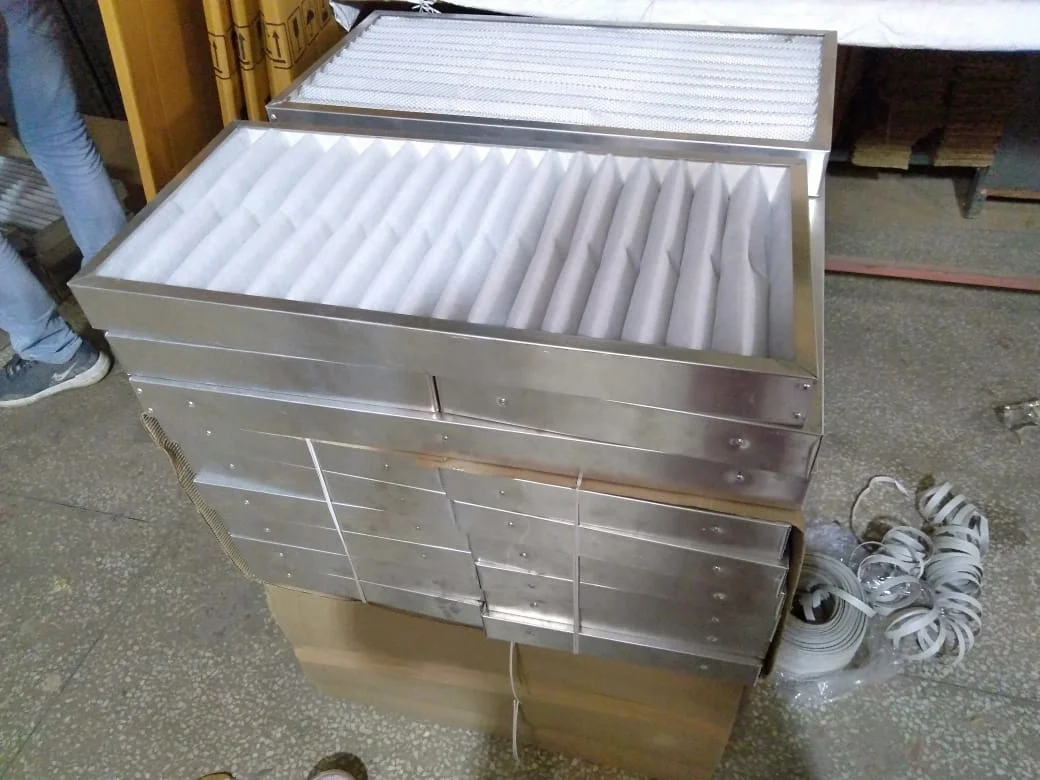
A HEPA filter is made of a dense mat of randomly arranged glass fibers or synthetic materials like polypropylene. Air is forced through this mat, and particles get trapped by 3 physical mechanisms.
Diffusion. Very small particles under 0.1 micron move randomly and collide with filter fibers. They can’t follow the airflow path and get permanently stuck.
Interception. Medium-size particles follow the airflow but pass close enough to a fiber to touch it and stick.
Inertial Impaction. Larger, heavier particles can’t navigate the curves of airflow around a fiber. They crash straight into it and stay there.
All 3 mechanisms work simultaneously, which is why HEPA filters are effective across the full range of airborne particle sizes — not just the large ones.
A True HEPA filter captures 99.97% of particles 0.3 microns or larger. That 0.3 micron size is actually the hardest to catch — known as the “most penetrating particle size.” A filter that passes at 0.3 microns performs even better at every other size.
HEPA Filter Efficiency Grades
Not all HEPA filters are the same. The European standard EN 1822 defines grades from H10 to H14. Each grade has a specific efficiency rating and is suited to different applications.
H10 — 85% efficiency. General commercial HVAC and basic ventilation.
H11 — 95% efficiency. Offices, warehouses, and general commercial spaces.
H12 — 99.5% efficiency. Laboratories and food processing units.
H13 — 99.95% efficiency. Hospitals, operation theatres, and ICUs.
H14 — 99.995% efficiency. Pharmaceutical plants and semiconductor cleanrooms.
Higher grades catch more particles but create more resistance to airflow. Choosing the right grade for the right application matters — over-specifying wastes money, under-specifying creates risk. For most hospital and industrial use in India, H13 is the accepted minimum standard.
Types of HEPA Filters
True HEPA Filter
The most widely used type. Meets the U.S. Department of Energy standard of 99.97% efficiency at 0.3 microns. Used in home air purifiers, commercial HVAC systems, and general industrial applications. When a product says “True HEPA,” it means it meets this certified standard.
HEPA-Type or HEPA-Like Filter
Efficiency ranges from 85% to 99% — lower than True HEPA. These filters look similar but don’t meet the same certified standard. They cost less and work fine for basic household dust, but are not suitable for medical, pharmaceutical, or cleanroom use.
Medical Grade HEPA Filter (H13 / H14)
The highest level of HEPA filtration available. Used in operating theatres, ICUs, pharmaceutical manufacturing, and biosafety labs. An H14 medical grade filter captures airborne pathogens, including certain viruses, that standard HEPA filters may miss.
Industrial HEPA Filter
Designed for heavy-duty environments — factories, chemical plants, metal processing facilities. These filters handle high airflow volumes and are built to survive harsh conditions including elevated temperatures, humidity, and chemical exposure.
Washable / Reusable HEPA Filter
Can be cleaned with water and reused multiple times. More cost-effective over the long term. However, filtration efficiency drops slightly after each wash. Suitable for home use and general industrial applications. Not recommended for medical or pharmaceutical environments where consistent certified performance is required.
Mini-Pleat HEPA Filter
Uses tightly folded filter media to fit more surface area inside a compact frame. This design reduces airflow resistance and extends the filter’s working life. Common in cleanrooms and precision manufacturing facilities.
Where Is a HEPA Filter Used?
Hospitals and Medical Facilities. Operation theatres, ICUs, and isolation wards require H13 or H14 grade filters. A single unfiltered airborne pathogen in a surgical environment can cause serious post-operative infection. HEPA filtration reduces that risk to near zero.
Pharmaceutical Manufacturing. Drug production requires Class 100 or Class 1000 cleanrooms, defined by the number of particles permitted per cubic meter. HEPA filters are the primary method used to achieve and maintain those standards.
Laboratories and Research Facilities. Microbiology, virology, and electronics research labs rely on HEPA-filtered air to prevent contamination of samples, experiments, and sensitive equipment.
Industrial Factories and Warehouses. Metal grinding, chemical processing, and textile manufacturing produce fine airborne dust that damages lung tissue and clogs machinery. Industrial HEPA filters protect workers and extend equipment life.
Home Air Purifiers. In cities like Delhi, Mumbai, and Kanpur where AQI regularly crosses 300, a HEPA air purifier removes PM2.5, household dust, pollen, pet dander, and mold spores from indoor air. Standard AC filters don’t come close to this level of filtration.
Commercial HVAC Systems. Large office buildings, hotels, hospitals, and shopping malls install HEPA filters in their central HVAC systems to maintain clean air throughout the entire building.
Automobile Cabin Filters. Premium vehicles use HEPA-grade cabin air filters that clean outside air before it enters the passenger compartment — useful in high-pollution urban environments.
Data Centers. Fine dust accumulation damages server hardware and causes overheating. Data centers use HEPA filtration to keep equipment clean and reduce maintenance costs.
HEPA Filter vs Other Air Filters
HEPA vs Standard Fiberglass Filter. A standard filter catches particles above 10 microns — visible dust and large debris. A HEPA filter catches particles down to 0.3 microns, including bacteria, PM2.5 fine dust, and mold spores. For serious air quality needs, a standard filter is not a substitute.
HEPA vs ULPA Filter. ULPA (Ultra Low Penetration Air) filters capture 99.999% of particles down to 0.12 microns — finer than HEPA. But they create significantly more airflow resistance, need stronger and more expensive fans, and cost more to purchase. ULPA is used only where HEPA is insufficient: semiconductor fabrication, nuclear facilities, and select pharmaceutical applications.
HEPA vs Activated Carbon Filter. HEPA filters catch particles. Activated carbon filters catch gases, odors, and volatile organic compounds (VOCs). They address different problems. Many air purifiers combine both in a single unit — HEPA for particulate matter, carbon for chemical gases and smells.
HEPA vs Electrostatic Precipitator. Electrostatic filters use an electric charge to attract and collect particles. They don’t require physical replacement like HEPA filters. However, they can produce ozone as a byproduct, and their efficiency drops as collected particles build up on the plates. HEPA produces no ozone and maintains consistent certified efficiency until it’s time for replacement.
Why Cities Worldwide Need HEPA Filters
Air pollution is not a problem limited to one country or one city. It is a global health issue that affects billions of people across every continent.
In Delhi, India, AQI regularly crosses 300–400 during winter months. PM2.5 concentration exceeds WHO safe limits by 10 to 15 times for much of the year.
In Beijing, China, industrial emissions and vehicle exhaust push AQI into hazardous territory for weeks at a time. The government has invested billions into air filtration systems across hospitals, schools, and public buildings.
In Jakarta, Indonesia, a combination of traffic pollution, industrial activity, and seasonal burning makes it one of the most polluted cities in Southeast Asia.
In London, UK, despite strict environmental regulations, nitrogen dioxide and fine particulate matter from traffic remain a persistent problem — particularly in underground transit systems and dense urban areas.
In Los Angeles, USA, wildfire smoke has added a new layer of air quality risk on top of existing smog, pushing demand for HEPA air purifiers to record levels in recent years.
The pattern is the same everywhere. Urbanization, industrialization, and vehicle traffic produce fine airborne particles that standard filters cannot catch. Only HEPA-grade filtration removes PM2.5, bacteria, mold spores, and airborne pathogens at the efficiency needed to genuinely protect health.
For industries worldwide — pharmaceutical manufacturing, electronics, food processing, healthcare — HEPA filtration is not optional. International standards including ISO, GMP, WHO GMP, and EU GMP all require controlled clean environments, and HEPA filters are the accepted method for achieving them across every country.
How to Choose the Right HEPA Filter
Step 1: Define the application. Home air purifier, industrial machine, hospital ventilation system, and pharmaceutical cleanroom all require different grades and configurations. Start here before looking at specifications.
Step 2: Select the correct efficiency grade. General industrial use: H11–H12. Medical and pharmaceutical: H13–H14. Home and office use: True HEPA (H13 equivalent).
Step 3: Match the physical dimensions. HEPA filters are not universal. Get the exact dimensions required for your equipment — check the machine’s model number and manufacturer specifications before ordering.
Step 4: Confirm airflow capacity. High-volume industrial and commercial applications need filters rated for high airflow, measured in CFM or m³/hr. A filter designed for a home purifier will fail quickly in an industrial environment.
Step 5: Request certification documentation. Ask for ISO 16890 or EN 1822 test certificates from the supplier. “HEPA-like” filters sometimes claim high efficiency numbers that are not backed by independent testing.
Step 6: Calculate total cost of ownership. A cheaper filter requiring replacement every 3 months often costs more annually than a higher-quality filter lasting 12 months. Factor in replacement labor costs for industrial applications as well.
HEPA Filter Maintenance Guide
How often to replace
Home air purifiers: every 6 to 12 months. Commercial HVAC systems: every 6 months, adjusted based on actual load. Hospital and pharmaceutical environments: replace strictly per manufacturer schedule — never extend. Industrial settings: inspect every 3 months, replace when pressure drop across the filter exceeds the manufacturer’s specified limit.
Signs a HEPA filter needs replacement
Airflow from the machine has noticeably dropped. The machine runs louder than usual — the motor is working harder against increased resistance from a clogged filter. Visible gray or black buildup is visible on the filter surface. Indoor air quality has declined despite the machine running continuously. Pressure drop readings exceed manufacturer specifications.
What to do
Always handle used HEPA filters with gloves. The trapped particles include pathogens, fine chemical dust, and allergens. Store replacement filters in sealed packaging until use. Keep a replacement log with dates — this matters for compliance in medical and industrial settings.
What not to do
Don’t vacuum a True HEPA filter to extend its life — vacuuming damages the fiber matrix and releases trapped particles back into the air. Don’t wash a non-washable HEPA filter — water destroys the fiber structure. Don’t operate equipment with a damaged, incorrectly installed, or missing filter.
HEPA Filter Price in India (2025)
Prices vary based on grade, size, airflow rating, and quantity.
Home air purifier replacement (True HEPA): ₹1000 to ₹10,000
Commercial HVAC HEPA filter: ₹2,500 to ₹20,000
Industrial HEPA filter: ₹5,000 to ₹70,000
Medical Grade H13/H14: ₹8,000 to ₹80,000+
Custom size or special application: quote-based
Bulk orders from manufacturers come at significantly lower per-unit cost compared to retail.
Frequently Asked Questions
What is the full form of HEPA filter?
HEPA stands for High Efficiency Particulate Air.
Can a HEPA filter capture viruses?
H13 and H14 grade HEPA filters capture particles as small as 0.1 microns, which includes most airborne viruses. Standard True HEPA (H11/H12) captures particles 0.3 microns and larger, including the droplet nuclei that carry viruses.
What is the difference between a HEPA filter and a normal filter?
HEPA filters are designed and tested to provide very high particle-removal efficiency compared with conventional air filters. They are used to capture fine airborne particles in applications such as healthcare, pharmaceutical manufacturing, cleanrooms and industrial air filtration
Which HEPA filter is right for home use?
For home use, choose a genuine HEPA filter that is appropriately rated for the air purifier and room size. The purifier’s CADR (Clean Air Delivery Rate) should also be suitable for the room.
How often should a HEPA filter be replaced?
Replacement frequency depends on the application, operating hours, air quality, filter loading and manufacturer recommendations. Home filters may commonly require replacement every 6 to 12 months, while industrial applications should follow the manufacturer’s recommended schedule and pressure-drop limits.
Are washable HEPA filters worth buying?
Only if the manufacturer specifically designs and specifies the HEPA filter as washable or reusable. Standard HEPA filters should not be washed because cleaning can damage the filter media and affect filtration performance.
Where can I buy HEPA filters in Delhi?
Fiilters.com manufactures HEPA filters in Delhi and supplies hospitals, pharmaceutical plants and industrial facilities across India. The company has more than 10 years of air-filter manufacturing experience.
About Fiilters.com
10+ years of manufacturing experience. ISO certified. Supplies hospitals, pharmaceutical plants, and factories across India.
Products available: True HEPA filters, medical-grade H13/H14 filters, industrial HEPA systems, and custom-size filters for specific equipment.
Whatsapp Number : 9999790843
Email : bafcustomercare@gmail.com
Address : 197/3, Gali No. 3, Padam Nagar, Sarai Rohilla, Delhi – 110007