
Filter Media – Types, Uses & Manufacturer in India | Fiilters.com
Every filtration system has two parts: the housing and the media inside it. Most buyers spend time choosing the housing. The media gets less attention.
That is a mistake. The media does all the actual work — it traps contaminants, removes suspended solids, corrects water chemistry, and decides how long your system runs before it needs maintenance.
Whether you run a water treatment plant, a pharmaceutical unit, or an industrial effluent system, the output quality depends directly on which filter media you are using and whether it is the right one for your application.
This guide covers every major type of filter media — what it does, where it is used, how long it lasts, and how to choose the right one. We manufacture and export filter media from India to 50+ countries, so everything here comes from direct production and field experience.
What Is Filter Media?
Filter media is the material placed inside a filtration system that physically or chemically separates unwanted particles, compounds, or contaminants from a liquid or gas.
The term covers a wide range — from silica sand used in large municipal water treatment plants, to activated carbon used in drinking water purifiers, to ceramic and metal media used in pharmaceutical and food processing units.
Two broad categories exist:
Liquid filter media — used in water treatment, chemical processing, oil & gas, and wastewater treatment.
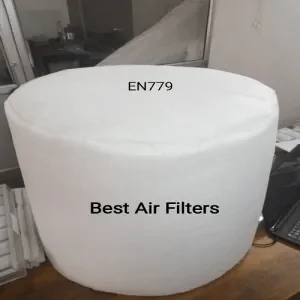
Air filter media — used in industrial air purification, HVAC systems, and cleanroom environments.
This guide focuses primarily on liquid filter media, which represents the larger industrial application globally.
How Filter Media Works
Filtration happens through 3 mechanisms. In most industrial systems, all 3 work together:
Mechanical filtration — particles are physically trapped because they are larger than the pore size of the media. Sand and gravel work this way.
Adsorption — contaminants stick to the surface of the media. Activated carbon works through adsorption. The carbon’s porous surface area attracts and holds chlorine, organic compounds, and odor-causing molecules.
Ion exchange — the media swaps unwanted ions with harmless ones. Zeolite and ion exchange resins work this way.
Most industrial systems use more than one media type in layers — called a multimedia filter — to handle different particle sizes and contaminant types in a single pass.
Types of Filter Media
1. Silica Sand Filter Media
Sand is the most widely used filter media in the world. It removes suspended solids and turbidity from water through mechanical filtration.
It is the core material in pressure sand filters, rapid sand filters, and slow sand filters. Municipal water treatment plants, RO pre-treatment systems, and swimming pool filtration units all depend on silica sand.
Effective grain size ranges from 0.4 mm to 1.2 mm. Finer sand removes smaller particles but requires more frequent backwashing. Coarser sand handles higher flow rates with less resistance.
- Primary use: turbidity and suspended solids removal
- Standard: AWWA B100 certified grades
- Lifespan: 3–5 years with regular backwashing
2. Activated Carbon Filter Media
Activated carbon removes chlorine, odors, taste-causing compounds, organic molecules, and certain heavy metals from water. It works through adsorption — contaminants bind to the carbon’s highly porous surface.
Two main forms are used in industrial systems:
Granular Activated Carbon (GAC) is used in fixed-bed systems where water passes through a carbon bed continuously.
Powdered Activated Carbon (PAC) is used where rapid dosing is needed, typically in batch treatment systems.
Coconut shell-based carbon has a higher iodine value and is preferred for drinking water and food-grade applications. Coal-based carbon is used for wastewater and industrial effluent treatment.
- Primary use: chlorine removal, odor control, organic reduction
- Applications: drinking water, food & beverage processing, pharmaceutical water systems
- Lifespan: 6–12 months depending on contaminant load
3. Zeolite Filter Media
Zeolite is a naturally occurring aluminosilicate mineral with a micro-porous structure. It has high cation exchange capacity, which makes it effective at removing ammonia and nitrogen — two contaminants that sand cannot handle.
Aquaculture facilities use zeolite to manage ammonia from fish waste. Sewage treatment plants and swimming pool systems also use it widely.
- Primary use: ammonia and nitrogen removal
- Applications: fish farms, effluent treatment plants, swimming pools
- Lifespan: 5–8 years
4. Garnet Filter Media
Garnet is a dense, hard mineral with a specific gravity of around 4.0 g/cm³. That density makes it the ideal bottom layer in multimedia filter systems — it sits below sand and anthracite and captures very fine particles (5–10 microns) that pass through the upper layers.
- Primary use: fine particle retention in layered filter beds
- Density: ~4.0 g/cm³ (sand is 2.65 g/cm³ for comparison)
- Applications: industrial ETPs, multimedia filter bottom layer
- Lifespan: 5–10 years
5. Anthracite Filter Media
Anthracite coal media has a low density of around 1.5 g/cm³, so it floats to the top in a multimedia filter. It handles coarser particle removal at the top layer, protecting the finer media below and extending system life.
Municipal water treatment plants, cooling tower filtration, and surface water treatment systems use anthracite. Combined with sand and garnet, it forms the classic three-media filter used in large-scale water treatment worldwide.
- Primary use: coarse particle removal, top layer of multimedia filters
- Applications: municipal water plants, cooling tower systems
- Lifespan: 5–7 years
6. Walnut Shell Filter Media
Walnut shell media is a natural, durable material used specifically for oil and hydrocarbon removal from water. It is reusable, backwashable, and biodegradable.
Refineries, petrochemical plants, car wash facilities, and stormwater management systems use it where high oil content in the effluent is a concern.
- Primary use: oil, grease, and hydrocarbon removal
- Applications: refinery wastewater, petrochemicals, oilfield water treatment
- Lifespan: 3–5 years depending on oil loading
7. Calcite / pH Correction Media
Calcite is a natural calcium carbonate material that raises the pH of acidic water by dissolving slowly into the water stream. The reaction is self-limiting — as pH rises, the dissolution rate slows down naturally, preventing over-correction.
- Primary use: pH neutralization of acidic water
- Applications: RO post-treatment, groundwater treatment, borewell water systems
- Safe for potable water contact
- Lifespan: 2–4 years (requires periodic refilling as media dissolves)
8. Gravel and Support Media
Gravel does not remove contaminants. Its job is structural — it supports the filter media above it, protects the underdrain system, and maintains uniform water flow across the filter bed.
Every sand filter, multimedia filter, and rapid gravity filter uses a gravel base layer. Without it, fine media migrates into the underdrain and blocks the system.
- Primary use: structural support for filter media beds
- Function: protects underdrain from media migration
- Lifespan: 7–10 years
9. Ceramic and Metal Filter Media
Ceramic media — made from porous alumina or silicon carbide — handles applications where chemical resistance and high-temperature tolerance are required.
Metal media — stainless steel mesh or sintered powder — is used for aggressive fluids, high-pressure systems, and applications where the media needs to be cleaned and reused indefinitely.
Pharmaceutical manufacturers, chemical processors, and semiconductor fabrication facilities use these where standard media would fail.
Filter Media Comparison Table
| Media Type | What It Removes | Common Applications | Lifespan |
|---|---|---|---|
| Silica Sand | Turbidity, suspended solids | Sand filters, RO pre-treatment, pools | 3–5 years |
| Activated Carbon | Chlorine, odor, organics | Drinking water, food & beverage | 6–12 months |
| Zeolite | Ammonia, nitrogen | Aquaculture, ETPs, pools | 5–8 years |
| Garnet | Fine solids (5–10 microns) | Industrial ETPs, multimedia filters | 5–10 years |
| Anthracite | Coarse solids | Municipal water plants, cooling towers | 5–7 years |
| Walnut Shell | Oil & hydrocarbons | Refineries, petrochemicals | 3–5 years |
| Calcite | Low pH correction | RO post-treatment, borewell water | 2–4 years |
| Gravel | Structural support | All filter systems (base layer) | 7–10 years |
How to Choose the Right Filter Media
No single media fits every application. The right choice depends on 5 factors:
1. Contaminant type. Identify what you need to remove first. Suspended solids need sand or anthracite. Chlorine and organics need activated carbon. Ammonia needs zeolite. Oil and hydrocarbons need walnut shell. Match the media to the contaminant first.
2. Particle size. Finer media removes smaller particles but restricts flow and requires more backwashing. Multimedia systems layer different grades to solve this — coarse on top, fine at the bottom.
3. Flow rate and pressure. Dense media like garnet slows flow. Lighter media like anthracite allows faster throughput. Check hydraulic properties against your system design before ordering.
4. Water chemistry. Acidic water degrades some media faster. High TDS can foul carbon media quickly. Check chemical compatibility before finalizing a specification.
5. Application standard. Drinking water systems need NSF/ANSI 61 or AWWA certified media. Pharmaceutical and food-grade systems need FDA-compliant materials. Always request certification documents.
Industrial Applications
Water Treatment Plants
Municipal and industrial plants use sand, anthracite, garnet, and activated carbon in sequence. Multimedia filters handle pre-treatment. Carbon beds handle polishing.
Pharmaceutical Manufacturing
Ultra-pure water requires carbon polishing followed by mixed-bed ion exchange resin. Every media used must meet pharmacopoeial standards.
Food and Beverage
Activated carbon removes chlorine that affects taste. Fine-grade sand or ceramic handles particle removal. Beverage-grade applications require NSF-certified carbon with low ash content.
Oil and Gas / Refinery
Produced water treatment uses walnut shell and anthracite. Media must withstand high oil loading, temperature variation, and repeated backwashing.
Aquaculture and Swimming Pools
Zeolite handles ammonia from fish waste. Sand handles turbidity. Both work together in recirculation systems.
Frequently Asked Questions
What is filter media?
Filter media is the material inside a filtration system that removes contaminants from water or air. It works through physical trapping, adsorption, or ion exchange — depending on the media type and target contaminant.
What is filter media in water treatment?
In water treatment, it is the granular or porous material that removes turbidity, suspended solids, chlorine, heavy metals, ammonia, and organic compounds. Sand removes suspended solids. Carbon removes chlorine and organics. Zeolite removes ammonia.
What is filter media made of?
Natural minerals (silica sand, garnet, anthracite), processed materials (activated carbon, zeolite, calcite), and synthetic materials (ceramic, stainless steel mesh). The right material depends on what the system needs to remove.
What is the difference between single-media and multimedia filters?
A single-media filter uses one material — typically sand. A multimedia filter uses 2 or 3 layers. Multimedia filters remove a wider range of particle sizes in a single pass and run longer between backwash cycles.
How often should filter media be replaced?
Sand: 3–5 years. Activated carbon: 6–12 months in high-chlorine applications. Garnet: 5–10 years. Actual lifespan depends on flow rate, backwash frequency, and chemical exposure.
Can filter media be customized?
Yes. Grain size, specific gravity, iodine value, effective size, and uniformity coefficient can all be specified to match your system design. We supply custom grades for bulk industrial and export orders.
What is backwashing and how does it affect media life?
Backwashing reverses water flow through the filter bed to flush out trapped particles. The right backwash rate and duration are critical — too little and the bed stays fouled, too much and you lose media. Correct backwash procedure directly extends media lifespan.
Why Buy from a Direct Manufacturer?
Buying directly means control over specification, grade, and quality documentation. No distributors — faster lead times, consistent batch quality, bulk orders against a single specification.
We manufacture the full range and export to 50+ countries including the Middle East, Southeast Asia, Africa, and Europe.
- ISO 9001:2015 certified manufacturing
- AWWA and NSF-grade materials available on request
- Full test reports and MSDS with every bulk order
- Custom grades against your written specification
- Export packing with compliance documentation
Whatsapp Number : 96255 55709
Email : bafcustomercare@gmail.com
Address : 197/3, Gali No. 3, Padam Nagar, Sarai Rohilla, Delhi – 110007